
The Filipino normative system has pre-colonial Indigenous values (community-centric), colonial Spanish Catholic morality (sin and shame), and post-colonial American individualism (market-driven success), all fighting for dominance. The result is a vapid identity crisis and self-race-hating insecurity.
When a Filipino is smart-shamed, it is often because the “smart” individual is perceived as wielding an alien, Westernized standard of logic against the indigenous value of shared identity or Kapwa, paired by its uncanny resemblance to the voice of a colonizer: a ‘Conyo’ whose hybrid disposition is physically Filipino and audibly ‘White’. The anti-intellectual reflex is a misguided attempt to protect the “us” (kami) from the “them” (sila/Other), even if “them” is a fellow Filipino trying to improve the status quo.
A peculiar phrase acts as a guillotine for critical thought: “Edi wow.” Roughly translating to a sarcastic “Okay, wow,” it is the verbal eye-roll of a nation, often accompanied by “Ikaw na ang magaling” (You’re the smart one, show-off). This phenomenon, colloquially termed “smart-shaming,” is the most visible symptom of Filipino anti-intellectualism. It is a reflex that prioritizes conformity over critique and mediocrity over excellence, trapping us into an endless state of mediocrity, failed individuation, and collective self-sabotage, unknowingly.
National Participation in Anti-Intellectualism
For the masa: Anti-intellectualism is a rejection of an educational system where English is a gatekeeping device used to humiliate those without the ‘cultural capital’ to wield it, hence the common phrase ‘Nosebleed na ‘ko’. This evolves into a counter-identity anchored in diskarte, a form of intelligence that feels earned through struggle.
Conversely,The middle class: Practices a more insidious form: the reduction of the poor to the caricature of the ‘bobotante’ (stupid voter), a lazy intellectual shortcut. This births a paralyzing form of learned helplessness and a collective ‘Cassandra complex’ where foresight is rendered useless by lack of agency.
The conyo (burgis) elite: Embrace Western liberal thought more for distinction than enlightenment, using progressive jargon as a status symbol. By wrapping simple truths in convoluted academic language, the Elite makes “intelligence” look like a weapon of class warfare.
As Benitez argues, this is a manifestation of a “trap of mediocrity” born from a chaotic collision of norms.
The Myth of the Two-Faced Virtue
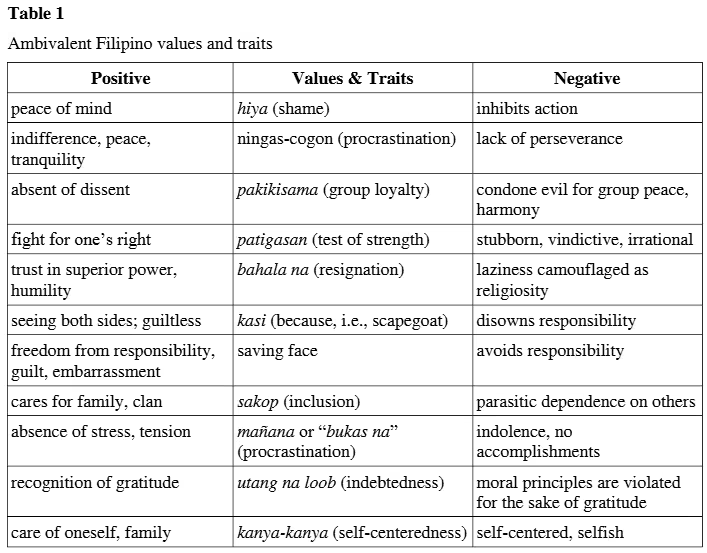 (Source: Quito, 1994)
For decades, the prevailing academic explanation for Filipino moral failures was the ‘Ambivalence Theory.’ Promulgated by thinkers like Emerita Quito and Vitaliano Gorospe, this theory posits that Filipino values are inherently bipolar: potentially good or potentially evil. In this view, ‘Bahala na’ can be fatalistic resignation or immense courage; ‘Hiya’ can be accountability or crippling anxiety.
However, this view is a trap. Benitez rebuts that this ambivalence is a misinterpretation: When ‘Bahala na’ is used to justify laziness, it is not the value that is ‘ambivalent’; it is the person who lacks the practical wisdom (Phronesis) to apply it correctly.
”Aristotle defines virtue as the middle ground or the mean between two extremes, the vice of excess and the vice of deficiency. The virtue of courage, for instance, is the mean between the vices of boldness and fear. As a virtue, courage hits the mark of moral excellence, whereas cowardice and boldness miss the golden mean.” (Benitez, 2022)
The value itself is pure. Blaming the value for the vice is like blaming the hammer for the bruised thumb. In this confusion, we treat the Aristotelian vice of deficiency as if it were the virtue of meekness.
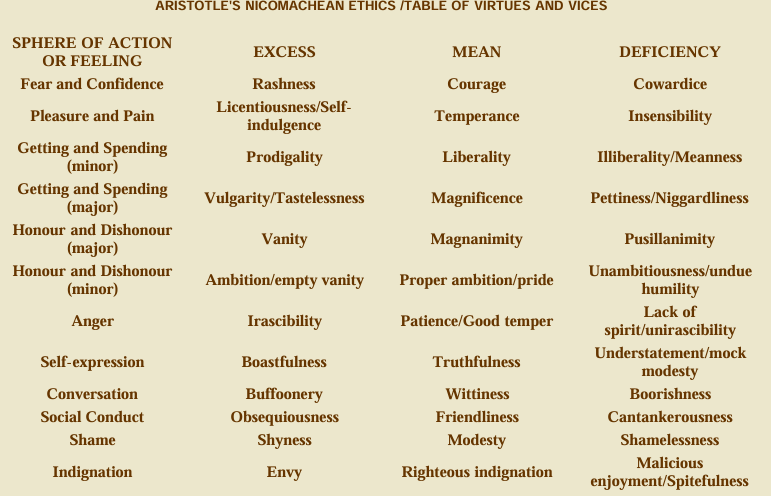 (Source: Table of Virtues and Vices)
The Schizophrenia of the Spirit
Nowhere is this dissonance more painful than in the spiritual realm. The Philippines is the third-largest Catholic nation in the world, with majority of its 118 million population identifying as Roman Catholic. Yet, it consistently ranks high in indices of corruption and political patronage.
This was diagnosed by the Jesuit psychologist Fr. Bulatao as “Split-Level Christianity.” It is the coexistence of two disparate value systems within the same person. At the surface level, the Filipino performs the rituals of the colonizer’s religion. At the deep level, they operate on a pre-colonial logic of transactional patronage.
In the distorted theology of the split-level believer, God is stripped of His status as the Logos (the Divine Reason) and reduced to a cosmic Padrino (patron), a deity to be bribed with rituals rather than honored with ethical consistency. The misuse of ‘Bahala na’ transforms it from an act of theological surrender into a mechanism of existential escapism that strips the human agent of the dignity of free will.
The Plague of Post-Modern Cynics
The tragedy of this cognitive dissonance is that it breeds cynicism, particularly among the youth. As Benitez’s research reveals, the younger generation sees the hypocrisy clearly. They see adults preaching Pagkakaisa (unity) while engaging in factional politics. They hear about Dangal (honor) but see survival at any cost. They are told that education is the key to success, yet they witness that palakasan (patronage) is the master key to survival. Unable to resolve this paradox, the psyche disconnects.
The Filipino youth are paralyzed by the injunction to be honest in a system that rewards deceit, which force them into a state of moral dissonance where they must essentially split their psyche to survive. This retreat manifests as a culture of ironic detachment. To care deeply is to be vulnerable, so the youth adopt a posture of performative indifference. The earnest intellectual is annoying and dangerous, for they remind the cynic of the hope they were forced to abandon.
Humor becomes a sedative rather than a critique. The viral meme or the witty retort serves as a release valve for social tension which allow the populace to acknowledge the absurdity of their condition without ever summoning the will to change it. This functions as a form of preemptive epistemic closure: individuals may understand new knowledge perfectly well, yet they lack the emotional stamina to absorb another disappointment.
Anti-intellectualism’s victory is the subconscious surrender to ignorance; the resignation that thinking will not change anything.
To break the trap of mediocrity, we must stop blaming our culture and start engaging with it philosophically. We must reject the notion that our values are inherently damaged and instead recognize that our efficacy has been distorted by centuries of survival instincts.
The cure for anti-intellectualism is not just more education, but a philosophical realignment. We must clean the mirror. Pakikipagkapwa (shared humanity) is not the enemy of critical thinking; it is the foundation of it. True pakikipagkapwa requires us to correct each other not out of hate, but out of a desire for the other’s improvement, and a desire for Eudaimonia, or human flourishing.
We must reclaim the intellectual rigor of our ancestors, who navigated vast oceans by the stars, and marry it with the demands of the modern world. We must stop weaponizing “Pilosopo” as an insult and start embracing it as a necessity. For a nation that refuses to think is a nation that refuses to grow, doomed to remain a shadow of the greatness it was always meant to possess.
References
Benitez, J. (2022). In defense of Filipino values and norms: Debunking the ambivalence theory. DOI:10.46223/HCMCOUJS.soci.en.12.1.2215.2022Benitez, J. (2022). An inquiry into the problems concerning Filipino values and norms. DOI:10.32871/rmrj2210.01.03